
The light of Eastern wisdom shines brightly in Leipzig, with the Mindfulness Culture Experience Hall packed with people
March 31, 2026 · 8:00 AM
Leipzig
On March 19, 2026, the four-day Leipzig Book Fair in Germany kicked off at the Leipzig Exhibition Center. Originating in the early 19th century, the Leipzig Book Fair (Leipziger Buchmesse) boasts a rich history and is the most significant event in the German-speaking region's book industry in spring. It not only serves as a trading platform for new books but also provides a cultural venue for direct interaction between booksellers, readers, and the media.
At this grand event of universal reading and civic education, the "Mindful School" series and the bilingual editions of Dharma Master Jiqun's works, "The Mind Creates Happiness" (Der Geist erschafft das Glück), "The Practice of the Metta Sutta" (Die Praxis des Metta Sutta), were launched at the book fair. Volunteers from Mindful Peace Germany e.V. brought these new books to the Leipzig Book Fair and carefully set up a "Mindful Culture Experience Pavilion". Through Zen-inspired projects such as peaceful Zen tea and mindfulness balls, they showcased the cultural charm and Zen lifestyle of Eastern wisdom to the visitors, attracting crowds of people to linger and participate in the experience.
(Accompanying image: Panoramic view of the exhibition, panoramic view of the booth)
Master Ji Qun is a renowned monk of Chinese Buddhism. He graduated from the Chinese Buddhist Academy in 1984 and subsequently taught at the Minnan Buddhist Academy, Jie Zhuang Buddhist Research Institute, and other institutions. Over the years, he has devoted himself to educating students and emphasizing both study and practice. He has published and presented over four million words of various works and papers. He inherits the life Buddhist thought of Master Taixu and proposes the concept that "Buddhism is the wisdom of life," hoping to dispel people's misunderstandings of Buddhism and bring it into everyday life.
The newly released book by Master Jiqun, which is exhibited this time, is titled "The Mind Creates Happiness". Why, despite having so much, do we still not find happiness? This leads to another question: What exactly is happiness? Is happiness a false phenomenon under certain conditions, or does it represent the essence of life? What hinders us from achieving happiness? If happiness is merely a temporary illusion, isn't pursuing it like chasing the moon in water, destined to be an unattainable fantasy?
In the context of "The Practice of the Metta Sutra", recognizing the significance of loving-kindness to life and the causes of its arising is an essential prerequisite for cultivating loving-kindness. If one does not acknowledge these two points, even if they listen to the "Metta Sutra" and find its content insightful, they may still perceive it merely as scripture, like a spectator, unable to connect with or resonate with themselves. Alternatively, they may merely listen to it as beautiful music, finding it pleasant and comfortable, but without the ability to harmonize the mind, let alone contemplating what actions to take after listening.
These books, shining with the brilliance of Eastern wisdom and culture, embody the concept of "Living with Heart, World with Heart", bringing the strength to maintain spiritual autonomy and tranquility in this noisy era.
(Accompanying image: Side page picture)
(Accompanying image: picture of a bookshelf)
(Accompanying image: Part of the content on the side page)
The Mindfulness Association of Germany, a non-profit organization headquartered in Munich, is committed to promoting the culture of mindfulness. It has introduced the "Mindfulness School Public Welfare Curriculum System" from Mindful Peace International (MPI). By establishing mindfulness schools and creating Zen-inspired spaces, it aims to pass on the wisdom of Zen, help people regain the ability to govern their minds, and thus return to their true selves, achieve self-healing, and build a Zen-inspired "mindful" life.
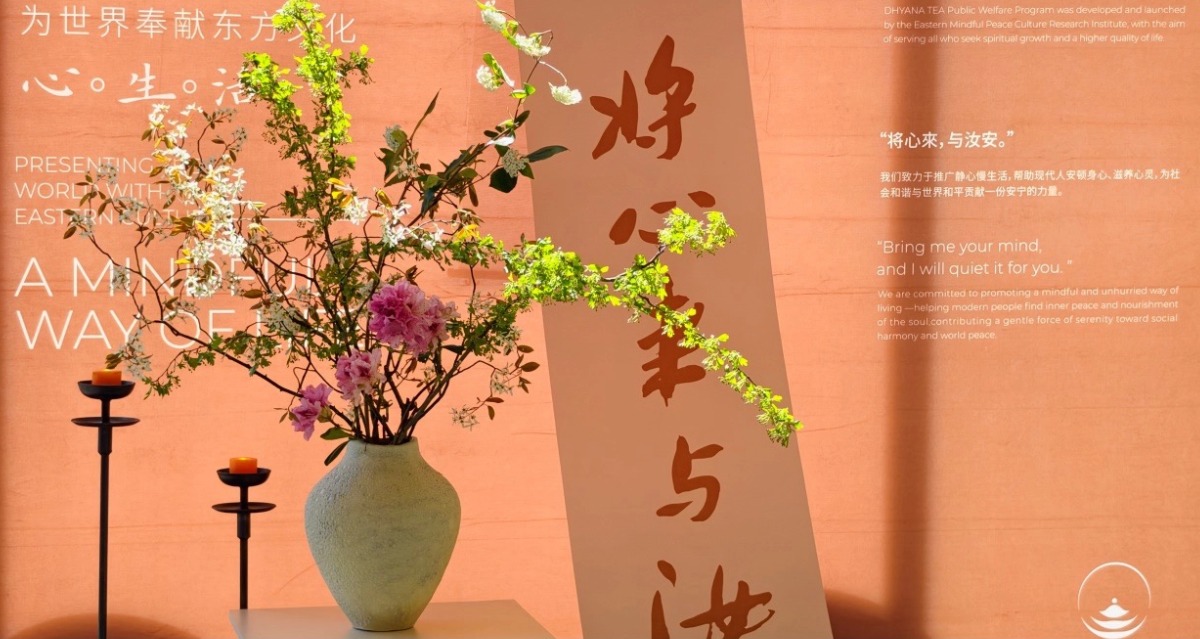
(Attached image: A picture with the words "Heart Life, Heart World" at the exhibition site)
(Attached picture: There is a picture with the words "Inheriting Oriental Wisdom, Providing Peace of Mind for the Times" at the exhibition site)
Inside the Jingxin Cultural Experience Hall, not only is there the fragrance of books, but also the aroma of tea. Volunteers set up a quiet and Zen-inspired tea table, bringing the Zen tea experience of "entering Zen through tea and returning to one's true self" to the scene. The seats for the "Anxin Zen Tea" are often "full", with groups of booklovers sitting under the Chinese calligraphy banner "Drinking a Cup of Anxin Tea with the World". From curious inquiries, pleasantly surprised experiences, to quietly sipping tea, they experience inner freedom and tranquility, and gain a revelation from Eastern wisdom.
(Photo: Enjoy your tea peacefully)
The Leipzig Book Fair places special emphasis on and encourages reading behavior among young people. During the several-day exhibition, most of the teenagers who came in groups to experience the mindfulness ball were students. The volunteers from the Mindfulness Association briefly guided them in their initial contact with the mindfulness ball, promoting the concept of "Find Your Center in the Chaos" through the simplest act of spinning the ball, conveying the mindfulness philosophy of "maintaining inner peace amidst chaos". This borderless and language-free exchange created a strong contrast between movement and stillness amidst the noisy crowds.
(Photo: Mindfulness Ball)
In Leipzig's cultural extravaganza, the wisdom and culture from the East, with its profound insight and enlightenment into the truth of life, pierces through the fog of the times, reaches straight to the heart, and sows the seeds of intellectual awakening on foreign soil.
Written by: Zhao Yan
Photography by: Zuo Yinglan
Editor: Guan Yang, Guan Lang